The sun has once again unleashed a powerful solar flare, continuing its streak of intense activity. On April 1, at 2:46 a.m. EDT (0646 GMT), an M5.6-class flare erupted from sunspot region AR4046 — the same region responsible for last week's X-class flare and massive coronal mass ejection (CME).
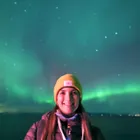
Unlike the previous event, this latest eruption could have a greater impact on Earth, as AR4046 has now moved into the "Earth strike zone," meaning any CME it produces in the coming days has a much higher chance of hitting our planet. If this flare is accompanied by a CME, it could set the stage for heightened geomagnetic activity, potentially triggering geomagnetic storms and dazzling northern lights at high and even mid-latitudes. Forecasters are currently awaiting coronagraph data to confirm whether a CME was launched alongside this event.
Meanwhile, AR4046 isn't the only sunspot region drawing attention. AR4048, a still-emerging sunspot that has yet to fully rotate to face Earth, has been crackling with activity, consistently firing off solar flares. Space weather forecasters are closely monitoring this region, as it could become another significant source of space weather disruptions in the coming days.
The NOAA Space Weather Prediction Center is placing the chances of an X-class flare — the most powerful category of solar flares — at 25% over the next three days. If such an eruption occurs and is accompanied by a CME, Earth could experience strong geomagnetic storms, which may lead to disruptions in radio communications, satellite operations, and GPS systems, but also enhance the chances of breathtaking auroras.

If you're interested in tracking space weather and knowing when and where to spot auroras, download a space weather app that provides forecasts based on your location. One option I use is "My Aurora Forecast & Alerts," available for both iOS and Android. However, any similar app should work well. I also use the "Space Weather Live" app, which is available on iOS and Android, to get a deeper understanding of whether the current space weather conditions are favorable for aurora sightings.