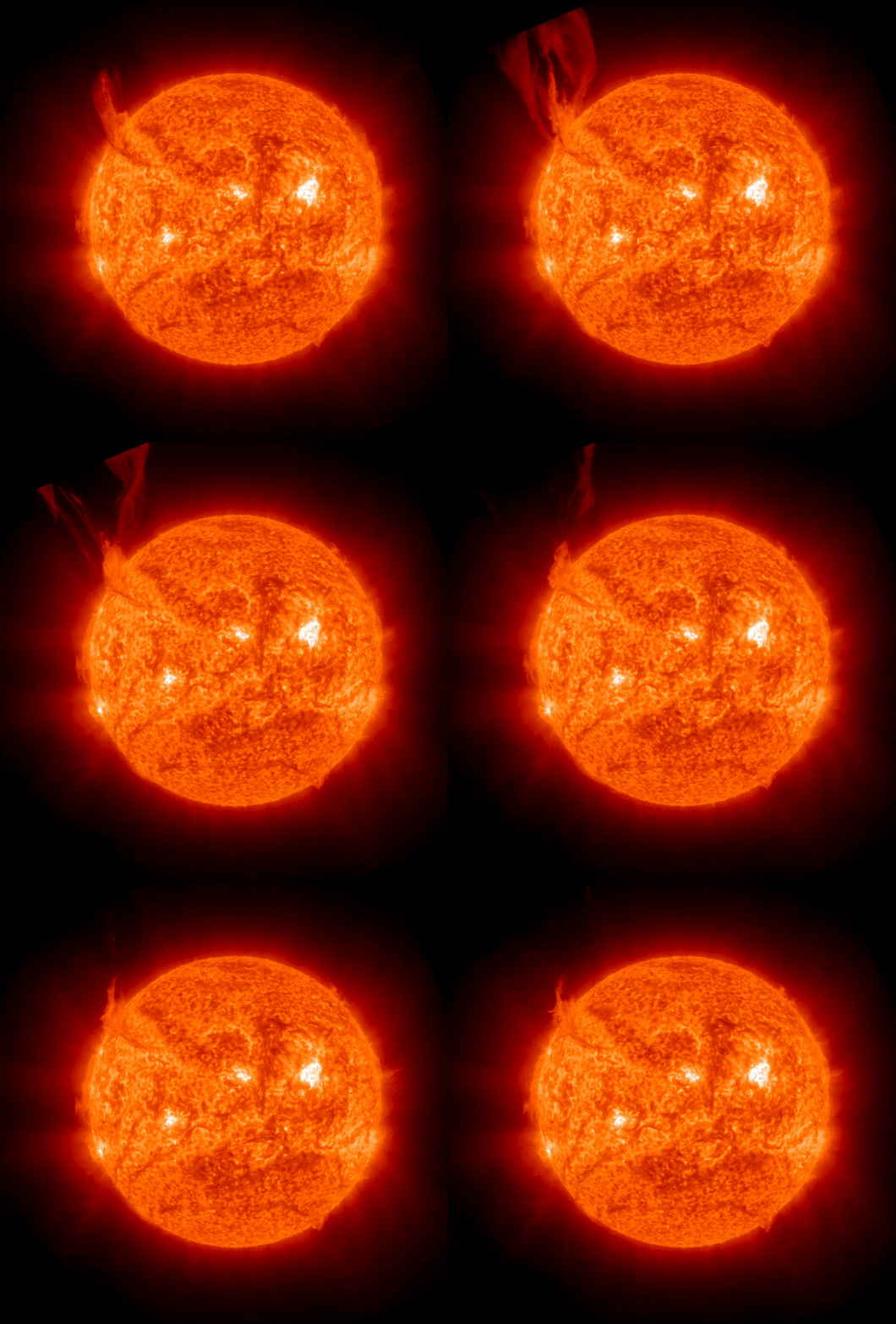
A massive solar filament erupted today (May 7), producing a stunning display that spanned the sun's eastern limb and reached deep into the solar disk.
Filaments are cooler, dense ribbons of solar plasma that can hang suspended above the sun's surface by magnetic fields, according to NOAA. When these become unstable, they can erupt dramatically, sometimes launching coronal mass ejections (CMEs) into space — powerful blasts of solar plasma and magnetic fields that can trigger geomagnetic storms here on Earth. However, in today's eruption, the filament was oriented away from Earth, meaning it will have no direct impact on our planet.
"The sun is doing just enough to show that it still has what it takes to produce activity while also dodging Earth at all costs," space weather forecaster Sara Housseal wrote in a post on X.
The Sun is doing just enough to show that it still has what it takes to produce activity while also dodging Earth at all costs. 😂 https://t.co/UJlTe2d9HVMay 7, 2025
The image was captured in remarkable detail by NOAA's GOES-19 spacecraft using its extreme ultraviolet (EUV) telescope called the Solar Ultraviolet Imager (SUVI) between around 6:30 a.m. EDT and 9:50 a.m. EDT (1030 and 1350 GMT). SUVI watched as the eruptive prominence showcased the sun's dynamic behavior in incredible detail.
Although this eruption won't affect Earth, forecasters are still keeping a close eye on solar activity this week. According to the UK Met Office, a combination of a weakening high-speed solar wind stream and possible glancing blows from previous CMEs could trigger auroras at high latitudes late Wednesday (May 7) or early Thursday (May 8), with another chance on Friday (May 9) when another high-speed solar wind stream is expected to strike.
Together, these space weather events could produce Minor Geomagnetic Storm (G1) conditions, meaning the aurora could become visible in northern parts of Canada, Alaska, Scandinavia, and other high-latitude regions.
You can keep up to date with the latest northern lights forecasts, alerts and geomagnetic storm warnings with our aurora forecast live blog.