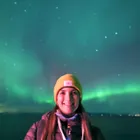
Nature served up a stunning double feature in the skies over Alberta, Canada, on June 9.
Aurora chaser and photographer Harlan Thomas (@TheAuroraGuy) was about 18.5 miles (30 kilometers) north of Calgary along a rural stretch he calls "The Twisted Pond Road" when the surprise display of both the northern lights and noctilucent clouds (NLCs) took to the sky.
"It was quite the surprise to see the aurora, as there was really no data to justify the geomagnetic conditions," Thomas told Space.com in an email. "It was even more surprising to see the NLCs, as they had to overcome wildfire smoke from the Northwest and a waxing gibbous moon that was 84% full."
NLCs are Earth's highest clouds, appearing as thin wispy blue or silver streaks about 47 to 53 miles (76 to 85 km) above the planet's surface. They form in summer when water vapor drifts into the mesosphere and crystallizes around meteoric dust. Their delicate glow is often visible from high latitudes shortly after sunset or before sunrise.
"There's nothing quite like seeing the aurora borealis and noctilucent clouds at the same time," Thomas told spaceweather.com. "It's the perfect combination."
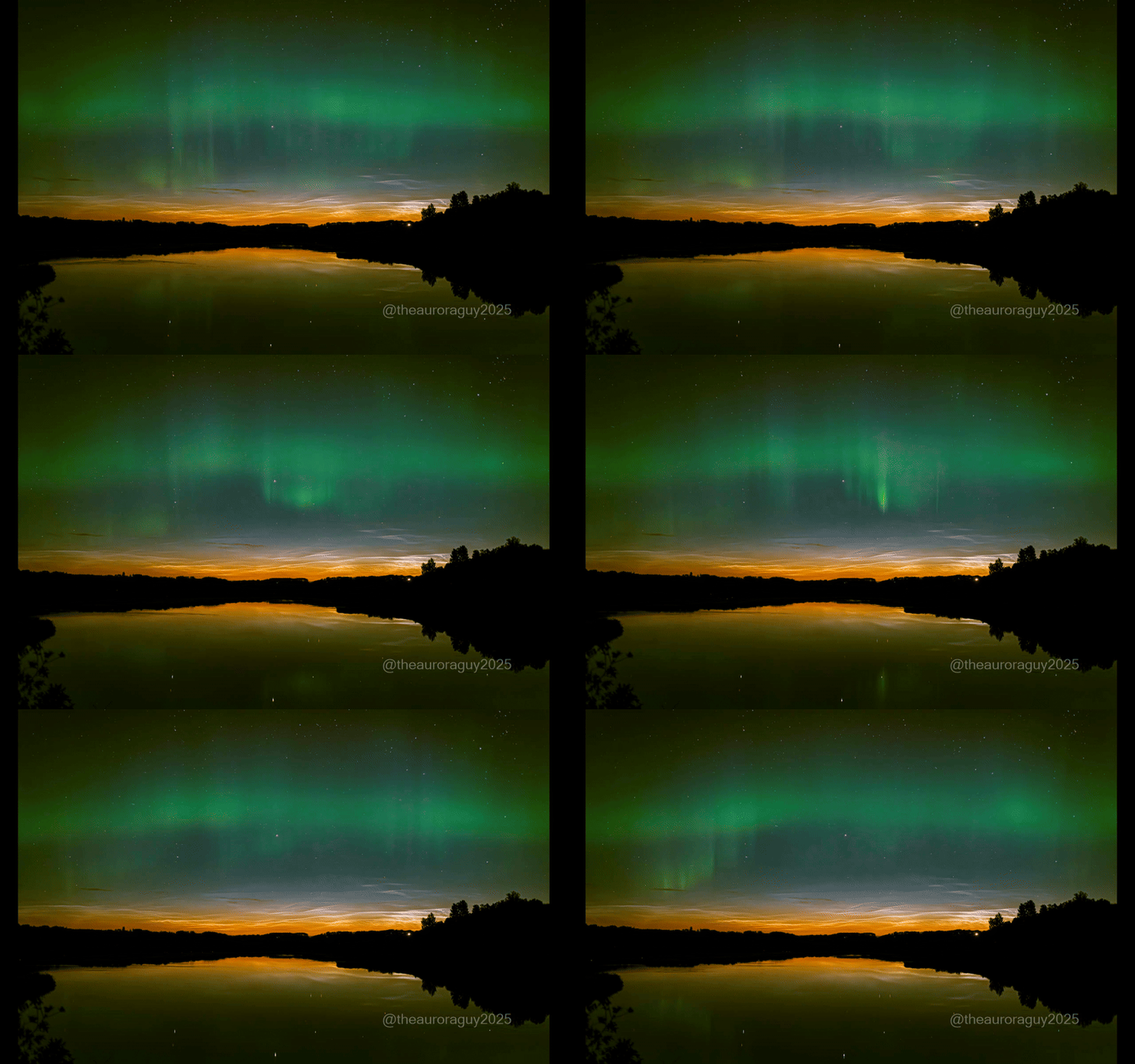
Thomas captured the scene using a Nikon D810 camera with a 50mm lens, shooting 1/30-second exposures at ISO 3200 with one-second intervals to create both a timelapse and a still image.
Surprisingly, this wasn't the first time Thomas had witnessed such a spectacle. In 2020, he not only captured NLCs and aurora but also a comet!
"On July 14, 2020, at the height of Covid, I captured the NLC's, Neowise [comet] and the aurora," Thomas told Space.com.


Talk about being in the right place at the right time!
The NLC season typically lasts through August, so skywatchers in northern latitudes may yet catch their own glimpse of this dazzling duo.
Want to brush up on your astrophotography skills? Our guide to astrophotography for beginners covers everything from equipment to shooting modes and more. Our best cameras for astrophotography and best lenses for astrophotography can also help you prepare to capture your next skywatching sight.
Editor's Note: If you snap a stunning astrophoto and would like to share it with Space.com's readers, send your photo(s), comments, and your name and location to spacephotos@space.com.