


Weather models are a daily staple of life on Earth, but they can go interplanetary as well, sometimes with a boost from Earth's most sophisticated computers.
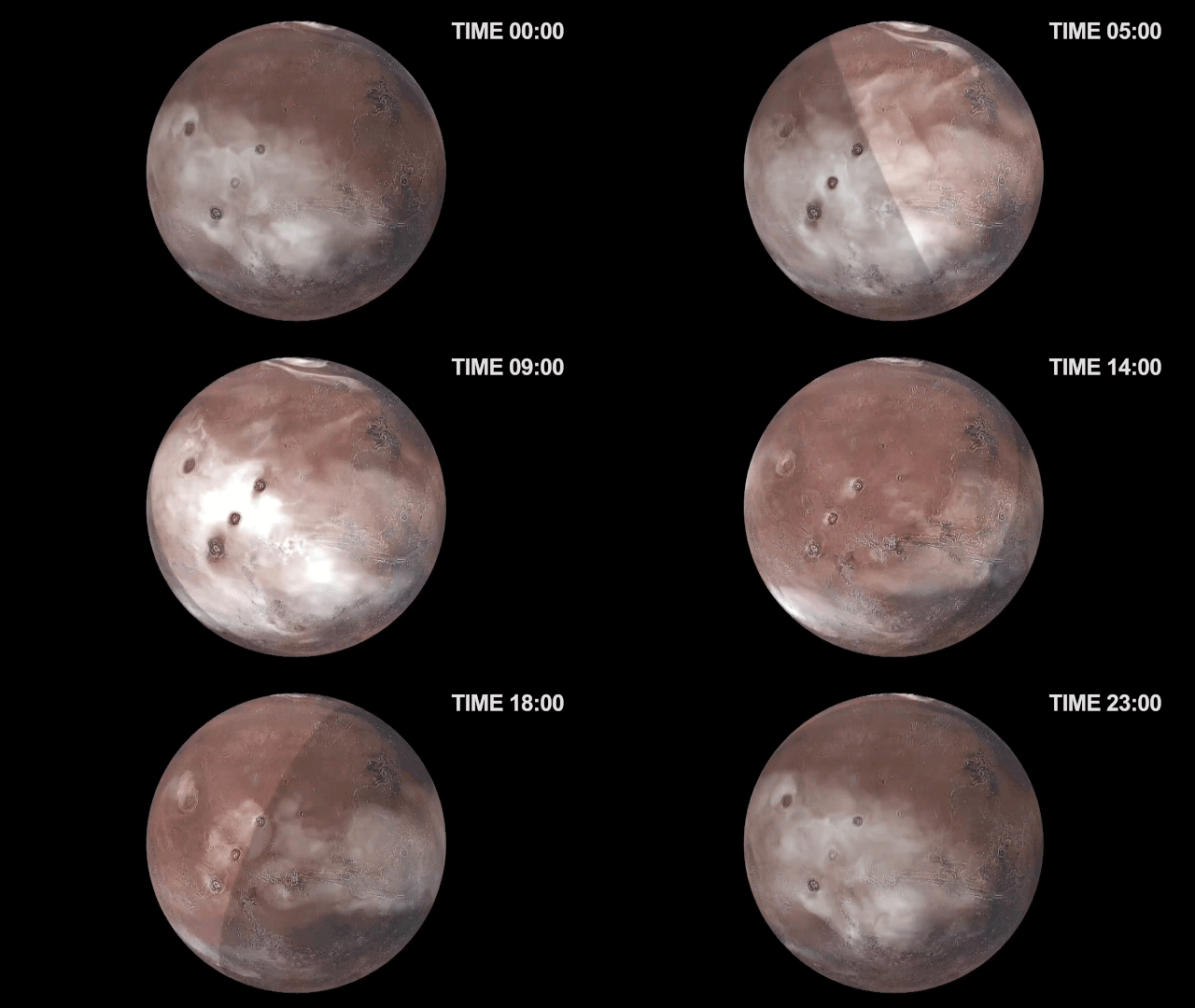
That sort of work is on display in a newly released NASA data visualization showing how clouds grow and shrink over the course of a day on Mars. The visualization is the work of the Mars Climate Modeling Center at NASA's Ames Research Center in California, relying on the institution's supercomputing facility.
In the visualization, features visible on the surface of Mars include the four massive Tharsis volcanic mountains that stand out like knots in a wood plank. The vast Valles Marineris stretches out along the right-hand-side of the view, etched into the Red Planet's surface.
Related: There's a Strange Cloud on Mars Right Now, and It's Just Hanging Around
The visualization is based on data about the Martian northern hemisphere's summer. During that season, equatorial clouds tend to form overnight, then wander away during the day. It's mesmerizing to watch, but modeling efforts like these also help researchers better understand the climate of the Red Planet.
The clouds themselves consist of water ice, like terrestrial clouds, but are typically thinner. By studying visualizations like this, scientists have concluded that Martian clouds shape wind intensity and in turn the water cycle, according to a NASA statement.
- 950-Mile-Long Cloud Spotted Over Martian Volcano. And It Has Staying Power.
- Meteor 'Smoke' May Spawn Cotton Candy Clouds on Mars
- Watch the Clouds on Mars Glide by in This Curiosity Rover Video
Email Meghan Bartels at mbartels@space.com or follow her @meghanbartels. Follow us on Twitter @Spacedotcom and on Facebook.

