An asteroid named Florence that will safely sweep past Earth on Sept. 1 is the largest object to give our planet a close shave since NASA began tracking these types of near-Earth asteroids, an agency official said.
The space rock measures 2.7 miles (4.4 kilometers) across. It will pass by Earth at a safe distance of 4.4 million miles (7 million kilometers), or nearly 18 times the distance between Earth and the moon.
"While many known asteroids have passed by closer to Earth than Florence will on September 1, all of those were estimated to be smaller," Paul Chodas, manager of NASA's Center for Near-Earth Object Studies (CNEOS) at the agency's Jet Propulsion Laboratory in Pasadena, California, said in a statement. [Photos: Asteroids in Deep Space]
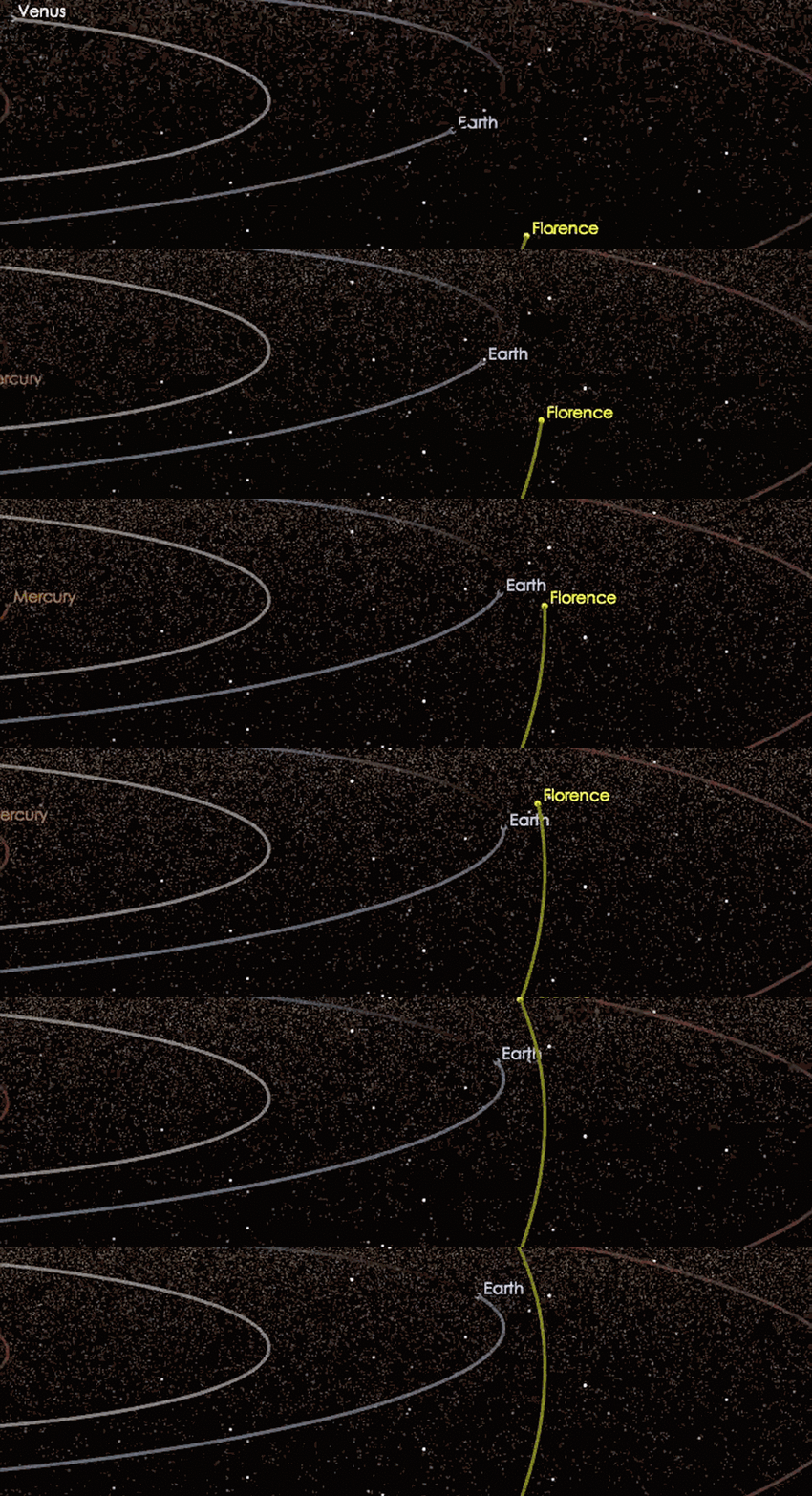
As asteroid Florence passes by Earth, astronomers will take the opportunity to capture radar images to learn more about the asteroid’s exact size and detailed surface features. The asteroid is named after Florence Nightingale, the founder of modern nursing.
Astronomer Schelte "Bobby" Bus first spotted asteroid Florence in 1981 at Siding Spring Observatory in Australia. The flyby on Sept. 1 is the asteroid's closest approach since 1890 and it won't get this close to Earth again until after 2500, according to the statement.

Amateur astronomers will be able to view the asteroid using small telescopes as early as late August, when Florence begins to brighten in the night sky and streaks through the constellations Piscis Austrinus, Capricornus, Aquarius and Delphinus.
Correction: This article previously stated that Florence would pass Earth to within eight times the distance from Earth to the moon; the asteroid will in fact pass to within 18 times that distance.
Follow Samantha Mathewson @Sam_Ashley13. Follow us @Spacedotcom, Facebook and Google+. Original article on Space.com.
Note: Video edited by Space.com senior producer Steve Spaleta.