





NASA?sshuttle Endeavour will have a pair of seasoned astronauts at the helm when itrockets towards the International Space Station (ISS) later this week.
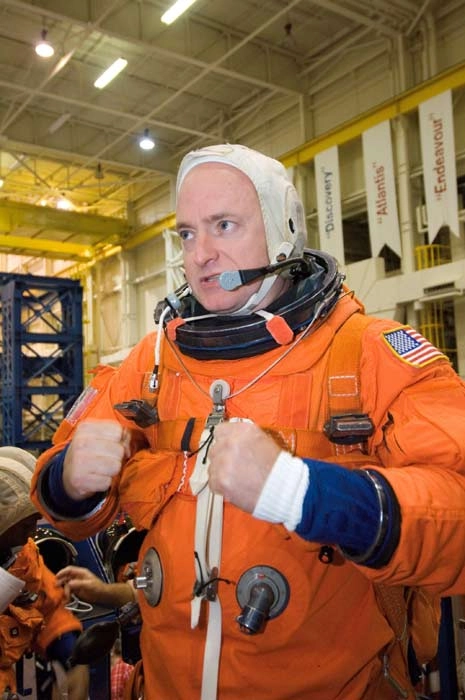
Veteranspaceflyer Scott Kelly is commanding a seven-astronaut crew for Endeavour?sSTS-118 construction mission to the ISS. Returning to space alongside him willbe experienced shuttle pilot Charles Hobaugh.
?You know,just flying is such a privilege and a great experience,? Kelly said in apreflight interview. ?The big thing I want to do is just fly a flight.?
Kelly,Hobaugh and their five crewmates are slated to launch Aug. 8 and spend up to 14days in space to haul fresh cargo, spare parts and install a new piece of theorbital laboratory to its starboard-most side. The crew also includes teacher-turned-spaceflyerBarbara Morgan, who originally served as backup to New Hampshireschoolteacher Christa McAuliffe in 1985 during NASA?s Teacher in Space program.McAuliffe as among the crew of the space shuttle Challenger when it broke apartjust after launch in January 1986,
Firstcommand
WhileKelly, 43, has flown in space before, Endeavour?s STS-118 mission will mark hisfirst to the ISS and as commander.
?It'sclearly different,? said Kelly, a commanderin the U.S. Navy, who last flew as pilot of NASA?s shuttle Discovery during1999?s STS-103 flight to the Hubble Space Telescope. ?As a pilot you'reresponsible for your own job, and as a commander you're responsible for yourown job and for everything else that's going on.?
A native ofOrange, New Jersey, Kelly first joined NASA?s astronaut ranks in 1996. Heserved as a backup crewmember for the space station?s Expedition 5 crew in 2002and led NASA operations in Star City, Russia before heading up the agency?sspace station branch of the Astronaut Office. But life as an astronaut was notoriginally the ultimate goal for Kelly, who is married to wife Leslie and hastwo children.
?It?s quitesurprising to be here,? said Kelly, who has logged more than 3,700 hours in 30aircraft and flew combat air patrol over Kuwait during Desert Storm, in a NASAinterview. ?It was more just the kind of the concept of flying in space andtaking flying to the next, most challenging level that inspired me.?
After 11years at NASA and almost eight days in space, Kelly has shaped a new view ofthe importance of human spaceflight, both now and for the future.
?I think ifwe?re going to continue to as a species eventually, far in the future, we?regoing to have to find another place to live,? he said. ?And this is just astepping stone towards that goal.?
Kelly is not the only member of his family to fly in space.His identical twin brother, Mark Kelly, is a veteran shuttle pilot with twospaceflights to the ISS under his belt and is set to command NASA?s STS-124flight to deliver part of Japan?sKibo laboratory to the station next year.
?Icertainly talk to my brother a lot, certainly not only about work,? Scott Kellysaid of his twin. ?He is a good source of information for me if I have anyquestions that only somebody who?s kind of been there and done that cananswer.?
Apilot?s pie-in-the-sky
Like Kelly,Hobaugh, 45, never seriously believed he?d end up a professional astronaut, thoughhe does recall reading about flying in the T-38 jets NASA uses to trainastronauts as a student in grade school.
?Being anastronaut?s kind of a pie-in-the-sky thought,? said Hobaugh, U.S.Marine Corps lieutenant colonel with the call sign ?Scorch,? ina NASA interview. ?But it?s an incredible job?it?s my job to go fly in space.?
The Bar Harbor,Maine native is a veteran USMC pilot, logging more than 3,000 hours in over 40different aircraft, including vertical takeoff and landing Harrier jets. Heflew combat missions in the Persian Gulf during operations Desert Shield/DesertStorm and later served as a naval test pilot instructor before joining NASA?sastronaut corps in 1996. He spent nearly 13 days in space as pilot of NASA?sSTS-104 mission in 2001 aboard Atlantis to help install NASA?s Quest airlock atthe ISS and change out the station?s crew.
The risksof human spaceflight, and shuttle flight in particular, are crystal clear toHobaugh, who is married to wife Corinna Lynn and has four children. On Feb. 1,2003, he was serving as spacecraft communicator, or CAPCOM, in Mission Controlwhen the space shuttle Columbiaand its seven-astronaut crew were lost during reentry. But after NASA?s work toreturn its shuttle fleet to flight in 2005, he is confident that the currentrisks are worth the payoff.
?[Y]ou'vegot to understand in taking this job is that it is a risky business. You're notdoing it with any reasonable assurance of coming back every time,? he toldreporters in a preflight interview, adding that mission success will always bethe top goal. ?There are things that will happen and things that we need to getpast, so that's kind of where I'm at there.?
One of thekey things to remember in space, Hobaugh added, is to set time aside toappreciate spaceflight during a mission.
?You?rereally cheating yourself if you don?t sneak a peek once in a while,? he said.?It really puts a good perspective on what the flight?s all about.?
Kelly, too,said he hopes to take some time to savor his first flight as shuttle commander.
?It's beeneight years, or almost eight years, since I flew last so I'm really lookingforward to this flight,? Kelly said. ?Hopefully the fact that I flew oncebefore, I'll be able to maybe enjoy a little bit more, or appreciate a bitmore.?
- VIDEO: Teaching the Future: Teacher-Astronaut Barbara Morgan
- Complete Space Shuttle Mission Coverage
- IMAGES: NASA's STS-117 Shuttle Mission in Pictures
