
NASA Contractor Bids to Continue Flying Space Shuttle
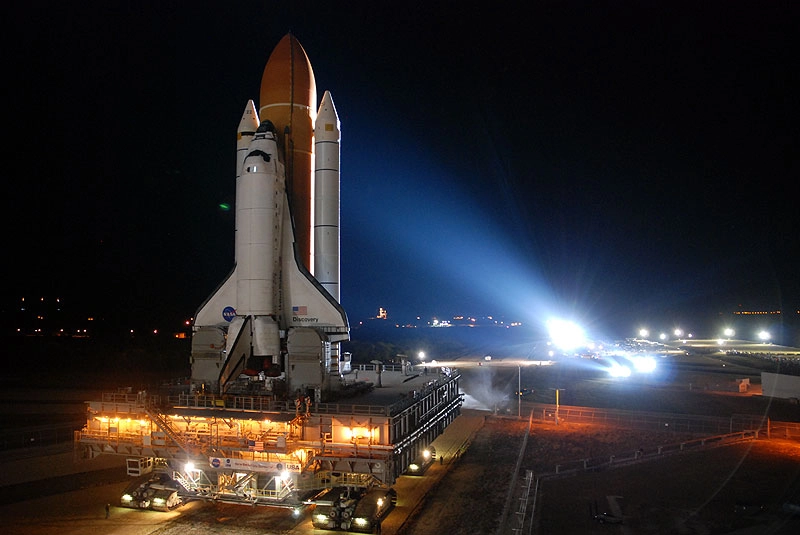
CAPE CANAVERAL, Fla. — United Space Alliance is preparing a long shot bid to continue flying the shuttle as a commercial service after NASA completes its last three planned missions this year.
Starting as soon as 2013, after construction of a new external tank, the lead operator of NASA's shuttle fleet proposes to fly twice a year with Atlantis and Endeavour at a cost of less than $1.5 billion a year.
"We thought this was a good option to be put on the table to be evaluated with all the other commercial options, since it's a vehicle that has really proven itself," said Mark Nappi, head of Houston-based USA's Florida operations. "It is safe. We have a lot of history, we understand how to operate it."
To avoid giving the company's employees false hope, however, Nappi has told them the proposal is "very much a long shot."
USA initially has proposed a six-month study of the commercial shuttle option, something Nappi noted has been studied a handful of times since the '90s.
The company asked NASA to help fund the study under a program set up to speed the development of new rockets and spacecraft able to carry people. Winners of the program's $200 million second round of funding are expected to be announced next month.
NASA has refused to comment on any of the companies' bids.
Nappi said it was too soon to estimate how many local jobs USA's Commercial Shuttle Transportation Service could produce. The company's local workforce, 6,000 strong two years ago, is expected to drop from 3,900 now down to about 1,000 after the last mission.
"We have a lot of work to do to even decide whether or not a business case exists," he said. "We have a lot of work to do to see if NASA is even interested, and politically, that's just a big question mark that none of us could ever predict. It is probably still a low probability."
Some, including NASA's independent safety advisory panel and Columbia accident investigators, have called for the shuttle to be retired for safety reasons.
But one space expert said USA's idea merits consideration as a way to ensure that NASA's top priority, the space station, continues to run smoothly even if commercial vehicles run into problems with planned deliveries of critical cargo.
"You need to have backup options, and this is a potentially expensive but very capable backup option that should be considered," said Scott Pace, director of the Space Policy Institute at George Washington University.
Nappi said many details need to be studied further, including the terms under which NASA would allow USA to continue operating the nation's shuttle fleet.
Nappi said he wasn't sure if USA would continue to pursue the business if NASA doesn't fund the commercial shuttle study next month.
"It really depends on the interest of customers, NASA and the other potential customers," he said. "If there's an interest there, we'll continue to work on it. If there's no interest, we're not going to waste our money."
