This image (cut out from a mosaic) shows the view from NASA's Mars rover Curiosity landing site toward the lower reaches of Mount Sharp, where the rover will likely start its ascent through hundreds of feet (meters) of layered deposits. Image taken on Aug. 8, 2012, released Aug. 17.
This mosaic image shows the first rock target (N165 circled) NASA's Curiosity rover aims to zap with its Chemistry and Camera (ChemCam) laser. The rock is off to the right of the rover. Image taken Aug. 8, 2012. Released Aug. 17.
This close-up image shows the first rock target, called N165, NASA's Curiosity rover aims to zap with its Chemistry and Camera (ChemCam) laser instrument. Image taken Aug. 8, 2012. Released Aug. 17.
This image from NASA's Mars Reconnaissance Orbiter shows the Curiosity rover landing and destinations scientists want to investigate. The rover's first driving target is the region marked by a blue dot that is nicknamed Glenelg. Released Aug. 17, 2012.
Scientists have named the scour marks by the Mars rover Curiosity's landing stage as, clockwise from the most north: Burnside, Goulburn, Hepburn and Sleepy Dragon. Image released Aug. 17, 2012.
This cropped image from NASA's Mars rover Curiosity shows one set of marks on the Martian surface where blasts from the descent-stage rocket engines blew away surface material. This particular scour mark is near the rear left wheel and named Goulburn. Image released Aug. 17, 2012.
This image shows a closer view of the landing site of NASA's Curiosity rover and a destination nearby known as Glenelg. Image by MRO spacecraft. Released Aug. 17, 2012.
This color-enhanced view of NASA's Curiosity rover on the surface of Mars was taken by the High Resolution Imaging Science Experiment (HiRISE) on NASA's Mars Reconnaissance Orbiter as the satellite flew overhead. Colors have been enhanced to show the subtle color variations near the rover, which result from different types of materials.
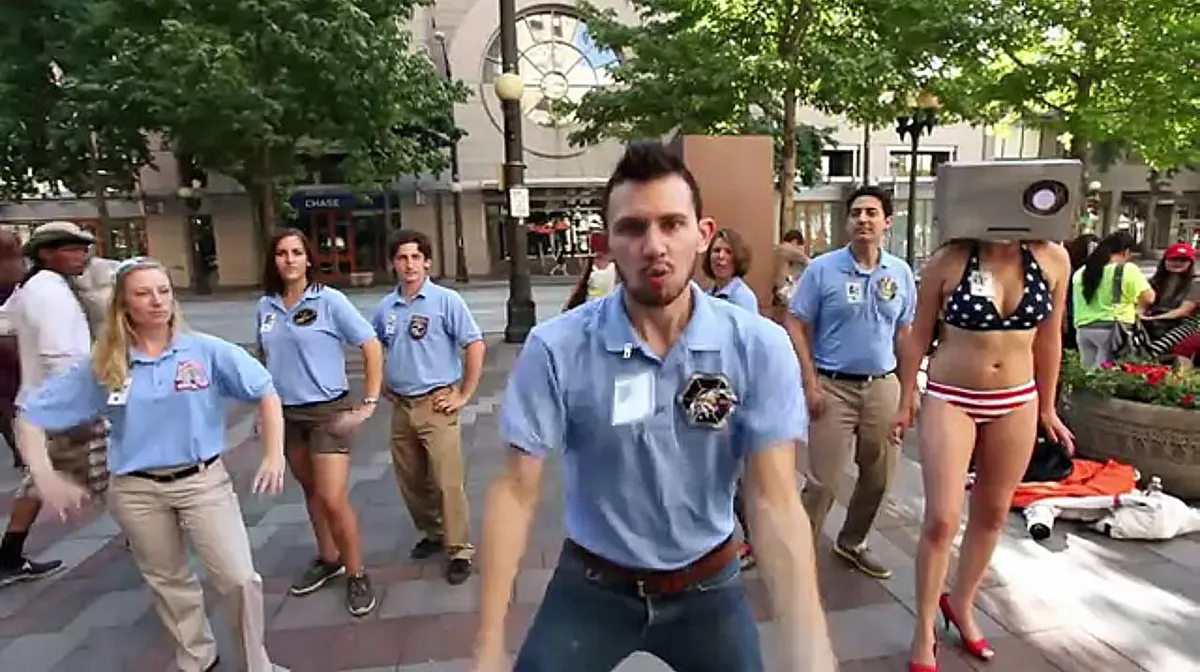
A group called Satire put together a spoof video about NASA's Curiosity rover landing on Mars.
This image from NASA's Mars Reconnaissance Orbiter has been annotated to show the relative positions between NASA's Curiosity rover (right) and the impact site of its sky crane, or descent stage after landing on Aug. 5, 2012.
This color-enhanced view — taken by the High Resolution Imaging Science Experiment (HiRISE) on NASA's Mars Reconnaissance Orbiter as the satellite flew overhead — shows the terrain around the rover's landing site within Gale Crater on Mars. Colors were enhanced to bring out subtle differences, showing that the landing region is not as colorful as regions to the south, closer to Mount Sharp, where Curiosity will eventually explore. In reality, the blue colors are more gray. Image released August 14, 2012.

This color-enhanced view of NASA's Curiosity rover on the surface of Mars was taken by the High Resolution Imaging Science Experiment (HiRISE) on NASA's Mars Reconnaissance Orbiter as the satellite flew overhead. Colors have been enhanced to show the subtle color variations near the rover, which result from different types of materials. Image released August 14, 2012.
NASA's Curiosity rover landed in the Martian crater known as Gale Crater, which is approximately the size of Connecticut and Rhode Island combined. A green dot shows where the rover landed, well within its targeted landing ellipse, outlined in blue. Image released August 14, 2012.
This 360-degree, full-resolution panorama from NASA's Curiosity rover shows the area all around the rover within Gale Crater on Mars. The rover's deck is to the left and far right. The rover's "head" or mast, where the Navigation cameras that took this picture are located, casts a shadow seen near the center. The rim of Gale Crater is to the left, and the base of Mount Sharp is to the center-right. The summit of Mount Sharp will be imaged at a later time. Image released August 9, 2012.
This image from NASA's Curiosity rover looks south of the rover's landing site on Mars towards Mount Sharp. This is part of a larger,high-resolution color mosaic made from images obtained by Curiosity's Mast Camera. Image released August 14, 2012.
This image is the first high-resolution color mosaic from NASA's Curiosity rover, showing the geological environment around the rover's landing site in Gale Crater on Mars. It's composed of 79 images snapped by Curiosity's Mastcam on Aug. 8, 2012
This color image from NASA's Curiosity rover, taken on Aug. 8, 2012, shows an area excavated by the blast of its sky crane rocket engines.
President Obama calls the NASA scientists behind the Curiosity Mars rover landing from Air Force One Aug. 13, 2012.
The team behind NASA's Mars rover Curiosity's Aug. 5 landing take a call from President Barack Obama on Aug. 13, 2012. At center is NASA Jet Propulsion Laboratory director Charles Elachi. Obama called the Mars landing "mindboggling."
This color image from NASA's Curiosity rover shows part of the north wall of Gale Crater, the location on Mars where the rover landed on Aug. 5, 2012 PDT. The photo was snapped by Curiosity's Mastcam on Aug. 8.
This color image from NASA's Mars rover Curiosity looks south toward Mars' huge Mount Sharp. This is part of a larger, high-resolution color mosaic made from images obtained by Curiosity's Mast Camera on Aug. 8, 2012.
The red X marks where NASA's Curiosity's Mars rover landed on Aug. 5, 2012 — about 1.5 miles east of the spot it was targeting. The dark blue ellipse at right shows the predicted landing sites for Curiosity's tungsten ballast (blue dots) and their actual impact spots (arrows). The dark streak cutting diagonally across the image's center is a stretch of sand dunes.
Mechanical engineer Stephen Pakbaz's LEGO version of NASA's Mars Science Laboratory rover, Curiosity — now with step-by-step instructions.
The distant blob seen in the view on left, taken by a Hazard-Avoidance camera on NASA's Curiosity rover is likely the impact cloud from the rover's descent stage after landing on Aug. 5 PDT, 2012. The cloud disappears in later photos.
This image from NASA's Mars Reconnaissance Orbiter shows the six craters created by the ejection of tungsten slugs during the Curiosity Mars rover's landing on Aug. 5, 2012.
Before Curiosity landed on Mars, scientists divided its potential landing zone into 151 "quadrangles" measuring about 1 mile on a side. Curiosity landed on quadrangle 51, which is now known as Yellowknife.
This close-up look at the Mars rover Curiosity's deck shows small Martian rocks on top of the rover. The rocks were kicked up by Curiosity's sky crane rockets, but pose no concern for the rover. Image taken on Sol 3 (Aug. 8-9, 2012).
This image comparison shows a view of Mars through a Hazard-Avoidance camera on NASA's Curiosity rover before and after the clear dust cover was removed. Both images were taken by a camera at the front of the rover. Mount Sharp, the mission's ultimate destination, looms ahead. The view on the left, with the dust cover on, is one quarter of full resolution, while the view on the right is full resolution. Composite image released August 7, 2012.
This picture of the Martian landing site of NASA's Curiosity rover puts a color view obtained by the rover in the context of a computer simulation derived from images acquired from orbiting spacecraft. The view looks north, showing a distant ridge that is the north wall and rim of Gale Crater. The color image was obtained by Curiosity's Mars Hand Lens Imager (MAHLI) on Aug. 6 PDT (Aug. 7 UTC), the first Martian day after Curiosity's landing on Aug. 5 PDT (Aug. 6 UTC).
This image is a 3-D view in front of NASA's Curiosity rover, which landed on Mars on Aug. 5 PDT (Aug. 6 EDT). The anaglyph was made from a stereo pair of Hazard-Avoidance Cameras on the front of the rover. The image is cropped but part of Mount Sharp, a peak that is about 3.4 miles (5.5 kilometers) high, is still visible rising above the terrain.
This image is a 3-D view in front of NASA's Curiosity rover, which landed on Mars on Aug. 5 PDT (Aug. 6 EDT). The anaglyph was made from a stereo pair of Hazard-Avoidance Cameras on the front of the rover. Mount Sharp, a peak that is about 5.5 miles (3.4 miles) high, is visible rising above the terrain, though in one "eye" a box on the rover holding the drill bits obscures the view.
This image was taken by Navcam: Left A (NAV_LEFT_A) onboard NASA's Mars rover Curiosity on Sol 2 (2012-08-08 07:05:05 UTC).
This image was taken by Navcam: Left A (NAV_LEFT_A) onboard NASA's Mars rover Curiosity on Sol 2 (2012-08-08 04:45:43 UTC).
This image was taken by Navcam: Left A (NAV_LEFT_A) onboard NASA's Mars rover Curiosity on Sol 2 (2012-08-08 07:04:32 UTC).
This image was taken by Navcam: Right A (NAV_RIGHT_A) onboard NASA's Mars rover Curiosity on Sol 2 (2012-08-08 07:05:05 UTC).
This image was taken by Navcam: Left A (NAV_LEFT_A) onboard NASA's Mars rover Curiosity on Sol 2 (2012-08-08 07:04:32 UTC).
See the amazing first photos from NASA's Mars rover Curiosity here: 1st Photos from Mars Rover Curiosity (Gallery)