





Starship is stacked on the pad at Starbase

We are just under one week away from the next launch of SpaceX's giant Starship rocket. The company is targeting a 75-minute window that opens at 8:15 a.m. EDT (1215 GMT) on Monday, Sept. 28, for liftoff of Starship's Flight 14 test launch, and the vehicle's first attempt to reach orbit.
SpaceX rolled the mission's Super Heavy booster (Booster 21) to Pad 2 at the company's Starbase, Texas, facility earlier this week, where its Ship upper stage (Ship 41) was delivered also last night.
The two stage are now stacked, according to NASA Spaceflight, ahead of a wet dress rehearsal (WDR) expected to take place on Thursday (Sept. 24). SpaceX announced Flight 14's Sept. 28 target last week, though the mission has yet to receive regulatory approval for launch.
Flight 14 is poised to be Starship's first time in orbit, and expected to last much longer than previous flights — about nine hours longer than the spacecraft's previous one-hour suborbital hops. Booster 21 and Ship 41 are both slated for soft splashdowns at sea; Super Heavy, following stage separation, and Ship following approximately six complete orbits, according to SpaceX's Flight 14 mission page.
Starship Flight 14 wet dress rehearsal happening now


Image credit: SpaceX

Image credit: SpaceX

Image credit: SpaceX
The sun has risen on SpaceX's towering Starship ahead of the rocket's Flight 14 launch and first attempt to reach orbit. The company completed stacking of Starship's Booster 21 and Ship 41 yesterday (Sept. 23), and is preparing to complete a series of tests and simulated launch run-through known as a wet dress rehearsal.
"Sunrise at Starbase," SpaceX said in a post on X. "Opportunistic full stack testing is planned ahead of Flight 14's launch, which is on track for Monday, Sept. 28, pending regulatory approval."
Monday's 75-minute launch window opens at 8:15 a.m. EDT (1215 GMT). Instead of the aproximately one-hour mission durations of Starship's previous suborbital launches, Flight 14's orbital jaunt, if everything goes according to plan, is expected to last nearly 10 hours.
Today's wet dress rehearsal, which involves fully fueling Starship on the launch pad for a full countdown simulation run, is expected to wrap up later this morning.
SpaceX stacks massive Starship rocket ahead of 1st orbital launch attempt (video)
Sunrise at Starbase. Opportunistic full stack testing is planned ahead of Flight 14's launch, which is on track for Monday, Sept. 28, pending regulatory approval pic.twitter.com/VnwI5v4eXQSeptember 23, 2026

T-1 hour until launch
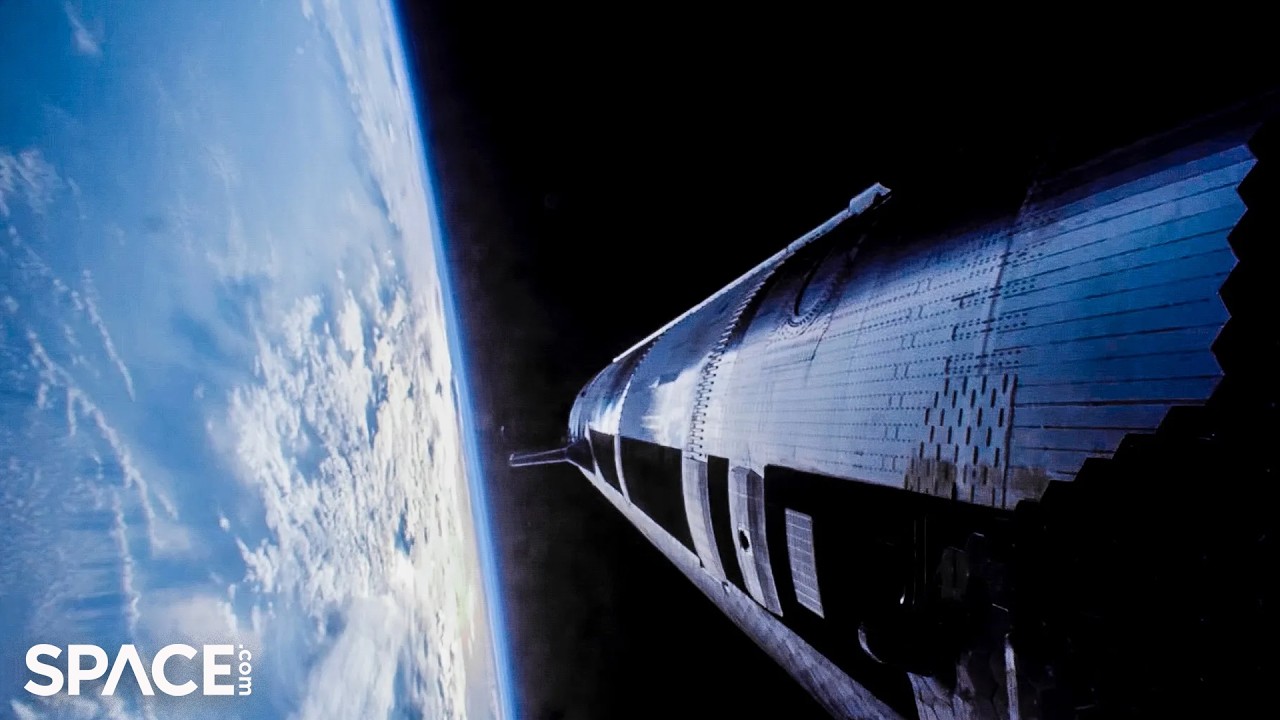
SpaceX's Starship is just 1 hour from the opening of the 75-minute launch window to lift off on its first orbital attempt.
Launch is scheduled for no earlier than 8:49 a.m. EDT (1249 GMT) this morning (Sept. 28) from Pad 2 at SpaceX's Starbase facility in South Texas, according to an X post from SpaceX this morning.
The mission is expected to last up to 10 hours, as Starship completes up to six orbits around Earth before performing deorbit maneuvers. If successful, this will be Starship's first time on orbit, and a major step forward for SpaceX's Starship program.
Starship’s 14th flight is set to launch on Monday, Sept 28. The 75-minute launch window opens at 7:15 a.m. CT. Live coverage of the mission starts ~35 minutes before launch → https://t.co/uQKQvgaTmJSeptember 27, 2026
Go for propellant load
SpaceX has begun loading propellant aboard the Flight 14 Starship rocket. Liftoff is currently counting down toward 8:49 a.m. EDT (1249 GMT).
Go for propellant load. Teams will soon begin loading Starship with ~12 million pounds of liquid oxygen and liquid methane. Targeting launch for 7:48 a.m. CT https://t.co/abZvBCJAm5September 28, 2026
Liftoff!
Liftoff!
SpaceX's Starship has cleared the tower at Starbase and on its way to space. Liftoff occurred at 8:49 a.m. EDT (1249 GMT).
Stage separation complete
A 2 minutes, 34 seconds into flight, Starship exectued a successful hot stage to separate Super Heavy Booster 21 with Ship 41. Booster 21 will now perform boostback burn as Ship 41 continues to orbit.
Booster 21 performs landing burn above Gulf

Booster 21 has completed a landing burn above its target splashdown in the Gulf. The Ship upper stage continues its burn to reach space.

Ship 41 reaches space, orbit questionable
Ship 41 has completed its initial engine burn to reach space. One of the spacecraft's Raptor 3 engines unexpectedly shutdown early, but the Ship was able to compensate to complete its engine burn.
SpaceX technicians are assessing next steps for the engine issue, and whether the mission will continue into orbit.
Starship is 'go for orbit'
SpaceX has decided to attempt Ship 41's orbital insertion burn, following an assessment of an early engine shutdown during ascent.
The orbital insertion burn will ignite a single Raptor 3 engine to circularize Starship's orbit at an altitude of approximately 170 miles (275 kilometers).
The orbital insertion burn is scheduled to take place at T+25 minutes, 17 seconds.
Starship is in orbit!
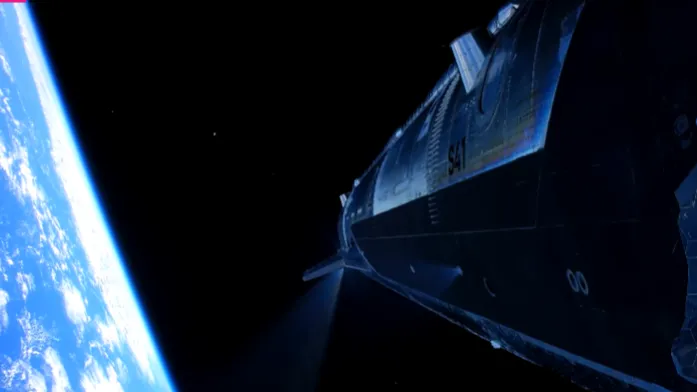
Ship 41 has completed its first-ever orbital insertion burn an altitude of approximately 170 miles (275 kilometers).
Deployment of Starship's Starlink payloads is scheduled to begin at T+34 minutes.
Payload deployment underway

Starship has begun deployment of its 26 upgraded Version 3 Starlink satellites.
SpaceX plans to eventually deploy 100,000 upgraded Starlink V3s to expand the company’s wireless satellite internet services. SpaceX has deployed sets of Starlink V3 test payloads on previous Starship launches, but due to their suborbital trajectory, all of them quickly came back down to Earth.
Three of the V3 Starlinks going up on Flight 14 are equipped with cameras for peering back at Starship after their deployment to inspect the spacecraft’s heat-shield tiles.
It will take about 30 minutes to deploy all 26 Starlinks aboard Ship 41's payload bay.
Payload deployment complete

Starship has released all 26 of its Starlink V3 payloads, including three tasked with pointing a set of cameras back at the Ship upper stage to inspect for heat tile damage and gather data on sample tiles used for Flight 14.
Ship will enter an approximately eight-hour coast phase. At the end of a nominal coast phase, the spacecraft will complete a deorbit burn to target a soft splashdown off the coast of Chile.
Starship returning from orbit early
SpaceX has decided to return Starship from orbit earlier than expected.
After valuating the upper stage Ship's status during its first orbital checkpoint, SpaceX technicians have decided to return the spacecraft to Earth earlier than expected.
Rather than spending another 7.5 hours on orbit, Ship 41 will perform its deorbit burn at approximately 11 a.m. EDT (1500 GMT), with splashdown in the Northern Pacific.
Deorbit procedures underway
Starship has performed a deorbit burn using one of the spacecraft's Raptor 3 engines and is on course for a splashdown in the Northern Pacific.

Splashdown!

Mission complete! The upper stage for Starship Flight 14, Ship 41, executed a successful decceleration burn and splashdown in the Northern Pacific to bring its first orbital mission to a close.
Splashdown occurred at approximately 11:58 a.m. EDT (15 GMT).
With the exception of completing the six orbits SpaceX had originally planned, Starship accomplished all the goals set for the Flight 14 mission, including fully reaching orbit and deployment of 26 V3 Starlink satellites.
Ship's return and splashdown wrap up the Flight 14 mission at T+3 hours, 9minutes — about 6 hours, 50 minutes earlier than the original mission duration.