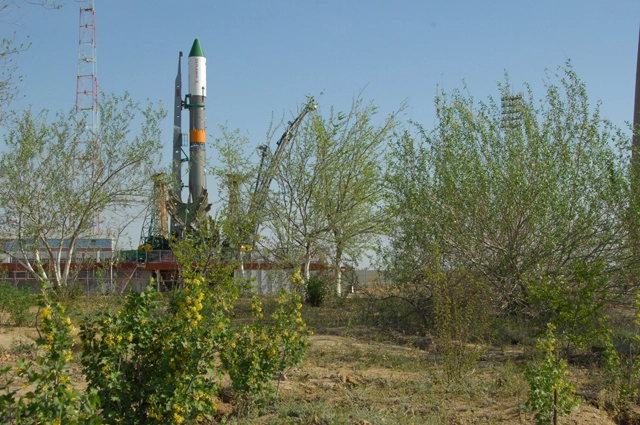
Another Russian-maderesupply ship for the International Space Station was successfully launchedinto orbit today, beginning a longer-than-usual trek to catch up with theoutpost.
Flying atop a Russian SoyuzU booster, the Progress M-02M spacecraft rocketed away from the BaikonurCosmodrome in Kazakhstan at 1837 GMT (2:37 p.m. EDT).
A preliminary orbit wasachieved after a nine-minute ascent provided by the three-stage rocket. Onboardcommands then extended the Progress craft's two power-generating solar arraysthat span 35 feet and unfurled communications and navigation antennas.

But instead of aiming for adocking with the station two days after launch, this freighter will spend a fewextra days in free-flight to test new avionics, according to NASA.
A series of precise enginefirings spread over today, Friday and Monday will guide the Progress toward itsautomated linkup. The docking is planned to occur next Tuesday at 1923 GMT(3:23 p.m. EDT).
The 24-foot long ship willattach itself to the Earth-facing port on the Pirs docking module, a spotvacated by the previous Progress vessel that undocked Wednesday. The oldvehicle, packed with trash, will remain in orbit through May 18 to perform someexperiments on the interaction between the craft's engine firings and theplasma environmental around Earth, NASA said.
Today's launch, known inthe station's assembly matrix as Progress mission 33P, will delivertwo-and-a-half tons of supplies tothe station. The "dry" cargo tucked aboard the Progress amountsto 3,384 pounds in the form of spare parts, life support gear and equipmenthardware.
The refueling modulecarries 1,918 pounds of propellant for transfer into the Russian segment of thecomplex to feed the station's maneuvering thrusters. And the vessel has 110pounds of oxygen and air.
The space station is occupiedby the Expedition 19 crew of commander Gennady Padalka and flight engineersMichael Barratt and Koichi Wakata. Padalka will be standing by Tuesday tomanually dock the Progress if the automated system experiences a problem.
- Video - Amazing Minotaur Rocket Launch: 'This Is So Cool'
- SPACE.com Show - The ISS: Foothold on Forever
- Image Gallery: 20 Great Rocket Launches
Copyright 2009 SpaceflightNow.com,all rights reserved.