CAPE CANAVERAL -- Theseven astronauts set to crew NASA's first space shuttle flight since theColumbia accident are confident their orbiter and redesigned external tank willperform, but admit some details still need to be ironed out.
The crew of STS-114,NASA's first return to flight mission, is in the middle of a two-day inspectionof the shuttle Discovery here at NASA's Kennedy Space Center.
"This is a testflight," astronaut Eileen Collins, the mission's commander, told reporters hereThursday. "I believe in what we are doing...I believe we are covered."

NASA is currentlytargeting a May 12 launch, but with three months left until NASA's currentlaunch window opens, there are still issues - such as exactly what capabilitythe STS-114 crew will have to repair Discovery's thermal protection tiles andreinforced carbon-carbon (RCC) panels - to be resolved.
Tile repair
Collins said shefully believes her crew expects to launch with at least some sort of thermalprotection repair capability, though what that may be remains unclear.
"We are looking atfive different types of repair techniques," Collins told reporters. "Of those five, we may fly with all of themor just a subset of them."
One of those methods includes a sort of caulking procedureto fill in cracks or holes in shuttle tiles using. It was a hole in Columbia'sleft wing, caused by a piece of foam insulation that broke of the orbiter'sexternal tank during launch, that let in hot gases during its Feb. 1, 2003reentry and destroyed the spacecraft.
"It comes down to asort of artistic application of this pinkish-orange goo," said missionspecialist Steve Robinson, who expects to spend one of the three plannedSTS-114 spacewalks testing tile repair methods. "I don't know if we're ready todo it in space yet or not."
Check out time
While the STS-114mission's primary goal is to test several new technologies aimed at improvingshuttle safety, Discovery will also be carrying vital spare parts, food andother supplies to the International Space Station (ISS).
During theirinspection of Discovery, the STS-114 astronauts are looking over the payloadbay, exterior thermal tiles and internal cabling in conjunction with theirmission goals.
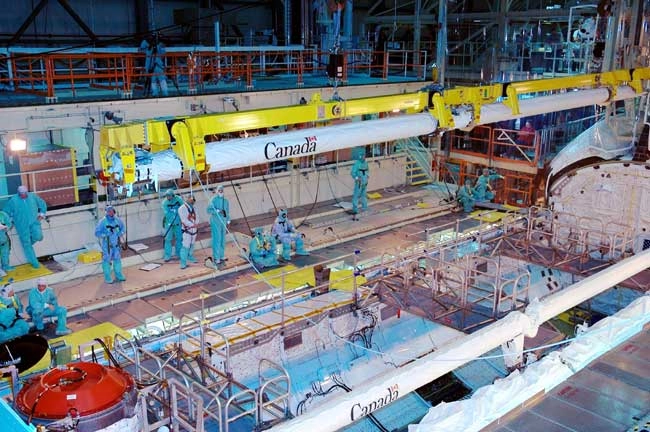
The orbiter sportsnew, wing-mounted sensors to track impacts and a 50-foot (15 meter) boom toscan Discovery's exterior for any damage while in orbit. A redesigned external tank - dubbed thesafest ever constructed by its builders - will carry the fuel Discovery will burnto reach space.
"It's a very detailedanalysis that this vehicle has been subjected too," mission specialist AndrewThomas said. "
That analysis appearsto satisfy Collins.
"Clearly I'm notgoing to go fly if it's unsafe. I'm a person who won't go on roller coastersbecause they scare me," Collins said. "We're really excited about flying andthe crew will be ready."
Fixing NASA: Continuing Coverage ofthe Space Shuttle Return to Flight
