• TechMediaNetwork
  • LiveScience
  • SPACE.com
  • Newsarama
  • TopTenREVIEWS
advertisement


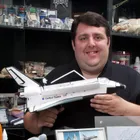
Scott Higginbotham Discovery's payload mission manager stands in front of the shuttle's payload bay, and the space station's Raffaello module tucked inside, just before the closing of the payload bay doors. Image Credit: Craig Bailey, FLORIDA TODAY

Florida Today: Coming Together
By Chris Kridler, John Kelly and Todd Halvorson
FLORIDA TODAY
posted: 12 July 2005
09:07 am ET

MERRITT ISLAND - "Nice shot!" Stephanie Stilson shouted as one of her teammates nailed the softball and sent it flying. "Aw, come on," she said when the umpire called the runner out.

The manager for Discovery was taking a break from intense preparations to get the shuttle flying again. It was the division softball challenge for Kennedy Space Center, and the people who put together the shuttle were putting bat to ball and glove to hand.

"You've got a bunch of engineers playing in a softball tournament. Nothing's easy," said Armando Oliu, the imaging expert who will lead the examination of photos of Discovery's launch.

As he waited for his team's turn to play, he watched with amusement as the players checked out a cracked aluminum bat on the sideline.

"We've got the mechanical guys analyzing the crack in the bat. The ops guys say, 'Use as is,' " Oliu joked.

The joke epitomized the tensions they were trying to work off on this beautiful, sunny afternoon at KARS park in early December 2004. The softball players sipped beer, water and Gatorade, shouting friendly jeers and encouragement.

Launch director Mike Leinbach showed up carrying a case of Budweiser and handed out beer to Stilson and the others as the game ended.

He petted Stilson's Boston terrier, Scrappy Lou, as Stilson held the leash.

"Don't bite him, Scrappy," she said.

"Don't bite the hand that feeds you," Leinbach agreed.

KENNEDY SPACE CENTER: Long hours help workers catch up

The hurricanes were over. Finally, the shuttle was coming together.

In November 2004, the first piece of Discovery's twin solid rocket boosters rolled slowly into the Vehicle Assembly Building.

Meanwhile, shuttle workers labored through the holidays. "I hate to even say it, but it seems like things are going really well," Stilson said in December.

That month, workers installed the three main engines. The only goof occurred when the hoisting machine tilted one engine during installation and dinged a heat-protection tile on the ship.

In January, as planned, the redesigned external tank chugged in from the ocean on its barge, pushed by tugboats up the Banana River and into the turn basin near the Vehicle Assembly Building. The next day, VIPs greeted the orange fuel tank's arrival with excitement.

"You can feel the change in the air," said shuttle program manager Bill Parsons, who lives on Merritt Island and splits his time between here and his main office in Houston. For him, the tank was a great 48th birthday present.

The new tank was redesigned without the piece of insulating foam that fell off and struck Columbia's wing during launch, leading to a fatal breach when the orbiter tried to re-enter the atmosphere.

A new heater system and other small changes were aimed at eliminating ice and reducing the shedding of foam at crucial areas of the new tank's surface.

Later that month, workers installed a new extension to the shuttle's robot arm in Discovery's payload bay. Its sensors would inspect the shuttle's heat shield for damage in orbit. The sensors would require more work and testing, but the installation of the 50-foot extension marked a major milestone.

With so many modifications for this mission, every step toward flight was a milestone.

LAUNCH COMPLEX 39: Rollover an emotional point on two-year trek

After a wait of two years and two months, two more hours didn't seem that long.

Delayed by several days, Discovery crept out of its hangar into the chilly early morning of March 29. It was still night, really, and journalists stood by as workers gave each other high-fives, handshakes and thumbs-up, taking snapshots of one another in front of the shuttle.

It came out slowly, tail and engines first, with bright white lights guiding it in the darkness. The old orbiter looked almost new. Stilson, the NASA manager who guided it this far, shed tears as she walked out with her ship.

"Are we really here? Are we really getting to the point where we're rolling out?" she thought.

It was like a strangely short parade, with members of the team of workers giving up sleep so they could carry a banner ahead of the shuttle as it was turned around and began rolling, nose first, toward the Vehicle Assembly Building. "We're behind you, Discovery!" said the signature-covered banner.

Stilson barely remembered the last two times her orbiter left its bay. This one, she knew, she would never forget.

More than a week later, the shuttle was ready to make an even longer trip -- to its launch pad, at just under a mile an hour. Hoisted upright and mated with its tank and boosters, Discovery sat in the VAB on the mobile launcher platform, which rode the back of its huge Crawler-Transporter.

A tiny crack spotted at the last minute in the external tank's insulating foam was deemed insignificant. Finally, Discovery slipped into the hide-and-seek sun, a spectacular sight, creeping toward pad 39B.

The trip lasted a few hours longer than planned when workers had to replace a bad logic card in the crawler. The shuttle docked at the pad at 12:30 a.m. April 7.

Stilson, about to get her master's degree, about to see the culmination of more than two years of tearing the orbiter apart and putting it back together, was exuberant.

"You thought I was excited at rollover," she said. "I'm much more excited now!"

SPACE STATION PROCESSING FACILITY, KENNEDY SPACE CENTER: Station hardware sees multitude of 'mini-crises'

Raffaello is not going easily into space.

The cylindrical cargo carrier sports a new hatch -- a substitute for a suspect unit that possibly wouldn't have opened when Discovery arrives at the space station on a badly needed supply run. The 50-inch hatch is outfitted with a pressure valve borrowed from a sister module. It will allow final leak checks before it is transported to the launch pad.

New fasteners anchor cabinets inside, after an 11th-hour cross-country scramble to replace broken hardware. An internal panel is flying as-is after last-minute analyses proved it would stay in place even though California factory workers had failed to install one of about 16 bolts ringing its perimeter.

"Part of making sure everything is right is having facts and data to go behind decisions that you make," said NASA mission manager Scott Higginbotham, the man responsible for preparing Discovery's cargo.

One of three identical cargo carriers built by the Italian Space Agency, Raffaello was named after the Renaissance painter Raphael, whose given name was Raffaello Sanzio.

The size of a short school bus, the pressurized carrier will haul 2,600 pounds of supplies to the station and bring home twice as much trash, outdated gear and equipment to be refurbished for future use.

Also in the shuttle's cargo bay is a dome-shaped gyroscope designed to keep the station positioned properly in orbit so limited fuel reserves don't have to be exhausted to do the same job.

The 660-pound flywheel is destined to replace a gyro that failed in August 2002.

And among other things, there's an external stowage platform to be mounted outside the station's U.S. airlock, where it will serve as a warehouse of sorts. Spare parts for the station's electrical power and radiator systems are attached to the platform, along with video camera mounts.

Preparing shuttle cargo for flight is never easy. Attention to details long has been standard. That sensitivity has been heightened even more during return to flight. So problems that might not have been flagged in the past are being brought to light. While none that have cropped up are potentially catastrophic, some could have threatened the mission's success.

"They're good catches," said Higginbotham, a married father whose wife, Bridgit, also works at KSC. "And that's what they pay us for."

Most surfaced late and, as a result, had to be solved in a hurry. That's not unusual.

"I come in every day, and it's like, 'What new calamity has befallen me today, and on what piece of hardware?' " Higginbotham joked. "And it's been equal opportunity. Every little piece we've had on the mission has had at least one or two of these mini-crises come up in the course of getting where we are today."

Now, everything is ready to go. But if not, NASA is ready to respond.

"You never know what new, interesting wrinkle tomorrow will bring," he said.

Published under license from FLORIDA TODAY. Copyright © 2005 FLORIDA TODAY. No portion of this material may be reproduced in any way without the written consent of FLORIDA TODAY.

         Florida Today Special Report: NASA's Return to Shuttle Flight

       Fixing NASA: Complete Coverage of Space Shuttle Return to Flight


Wheels on Mars DVD
$8
Explore More


Site Map | News | SpaceFlight | Science | Technology | Entertainment | SpaceViews | NightSky | Ad Astra | SETI | Hot Topics
Image Galleries | Videos | Reader Favorites | Image of the Day | Amazing Images | Wallpapers | Games | Community | Reviews
about us | FREE Email Newsletter | message boards | register at SPACE.com | contact us | advertise with us | terms & conditions | privacy statement
DMCA/Copyright
  What is This?
<