This storywas updated at 12:30 p.m. EDT.
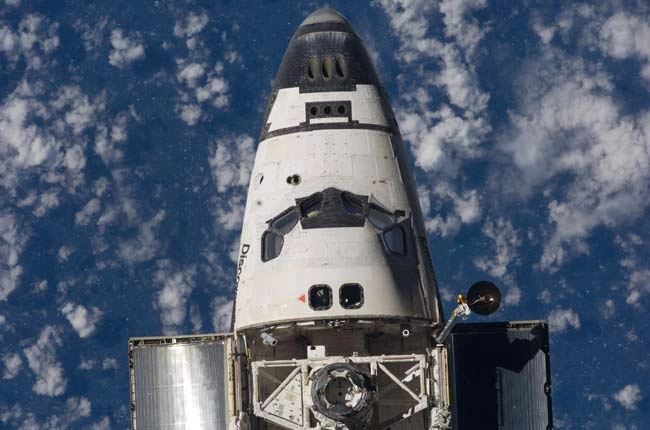
NASAdelayed the planned Saturday return of the space shuttle Discovery by a few hours after thickclouds and stiff winds prevented an initial landing attempt in Florida.
Discoveryis now slated to land at NASA?s Kennedy Space Center in Florida at about 3:14 p.m.EDT (1914 GMT) today, a bit later than planned, to complete a successful13-day construction flight to the International Space Station. Clouds andhigh winds prevented the shuttle from targeting a 1:39 p.m. EDT (1739 GMT) touchdown.

?We think boththose things have a good chance of looking better for our second opportunity today,?Mission Control radioed the crew.
?Houston, Discoverycopies,? shuttle commander Lee Archambault called back.
Discovery nowhas one more chance to land at its Cape Canaveral, Fla., runway today before standingdown until Sunday.
Shuttle entryflight director Richard Jones told reporters Friday that he will aim for aFlorida landing today and, if needed, on Sunday because of favorable weather forecastsfor both days. NASA typically prefers to land shuttles at the Florida spaceportto avoid the extra time and cost of ferrying orbiters from a backup runway inCalifornia. Discovery has enough supplies to stay in space until Tuesday, headded.
Fullpower to space station
Archambaultand his crew spent eight days docked at the space station, where they performedthree spacewalks to install the newexpansive solar arrays - the outpost?s fourth and final set - and unfurlthem to their 240-foot (72-meter) wingspan.
The $298million solar arrays delivered by Discovery balanced out the space station?slook, giving it eight wings total (two per side), and increased its power gridby 25 percent. They also completed its backbone-like main truss, which is nowlonger than a football field in length.
With allfour arrays in place, the station is designed to generate enough electricity tofeed a neighborhood of 42 average size homes, power that is vitally needed ifthe station is to double its crew size to six later this year and increase itsscience output. The shuttle crew also helped repair the space station?s waterrecycling system, which converts astronaut urine and sweat back into puredrinking water to support larger crews.
?Deployingthe solar arrays was one of the high points of this flight,? mission specialistJohn Phillips told students in Hawaii Thursday. ?We?re all really proud tobring that extra power to the station.?
Phillipsand his crewmates were speaking with students from Punahou School in Honolulu, President Barack Obama's high school alma mater, justdays after receiving a phonecall from the president himself praising their mission.
Set toreturn to Earth aboard Discovery with Archambault and Phillips are shuttlepilot Dominic ?Tony? Antonelli and mission specialists Joseph Acaba, StevenSwanson, Richard Arnold II and Sandra Magnus. Acaba and Arnold are formerschoolteachers and making their first spaceflight along with Antonelli.
Magnusis retuning home after spending 134 days in space. She arrived at theoutpost last November and was replaced by Japanese astronaut Koichi Wakata -Japan?s first long-term station resident - who launched with Discovery?s crewon March 15.
?It was alot of fun on the space station,? Magnus told Mission Control this week. ?Atruly unique adventure.?
Magnus toldreporters she will miss the views from space - especially the colors of thewaters around the Caribbean - but is looking forward to being outside for thefirst time in months, and perhaps a chocolate milkshake, some sushi and acheesy pizza.
About fivemonths? worth of experiment samples, including blood, biological samples in afreezer and cold storage bags, as well as four of five liters of recycled waterfrom the station?s urine recycler, are also packed aboard Discovery.
The shuttleastronauts left the space station on Wednesday to clear the way for a new crewand space tourist Charles Simonyi, who arrived atthe station at 9:06 a.m. EDT (1306 GMT) today.
?This isthe calm before the storm,? station commander Michael Fincke told MissionControl Friday. ?The hurricane is coming, the next crew?s on its way.?
SPACE.comis providing continuous coverage of Discovery?s STS-119 mission with reporter Clara Moskowitz and senior editor TariqMalik in New York. Clickhere for mission updates and SPACE.com's live NASA TV video feed.LIVE landing coverage begins at 10:00 a.m. EDT (1400 GMT).
- New Video - President Obama Talks With Shuttle, ISS Crews
- New Video - See the Space Station from Earth
- New Show - Inside the International Space Station
